Class Notes
A high-traffic page that followed the format of a print magazine, rebuilt as a searchable, dynamic archive that improves over time and turns passive scrolling into an interactive experience — proposed, designed, built.
See it (opens in a new tab)Where it started
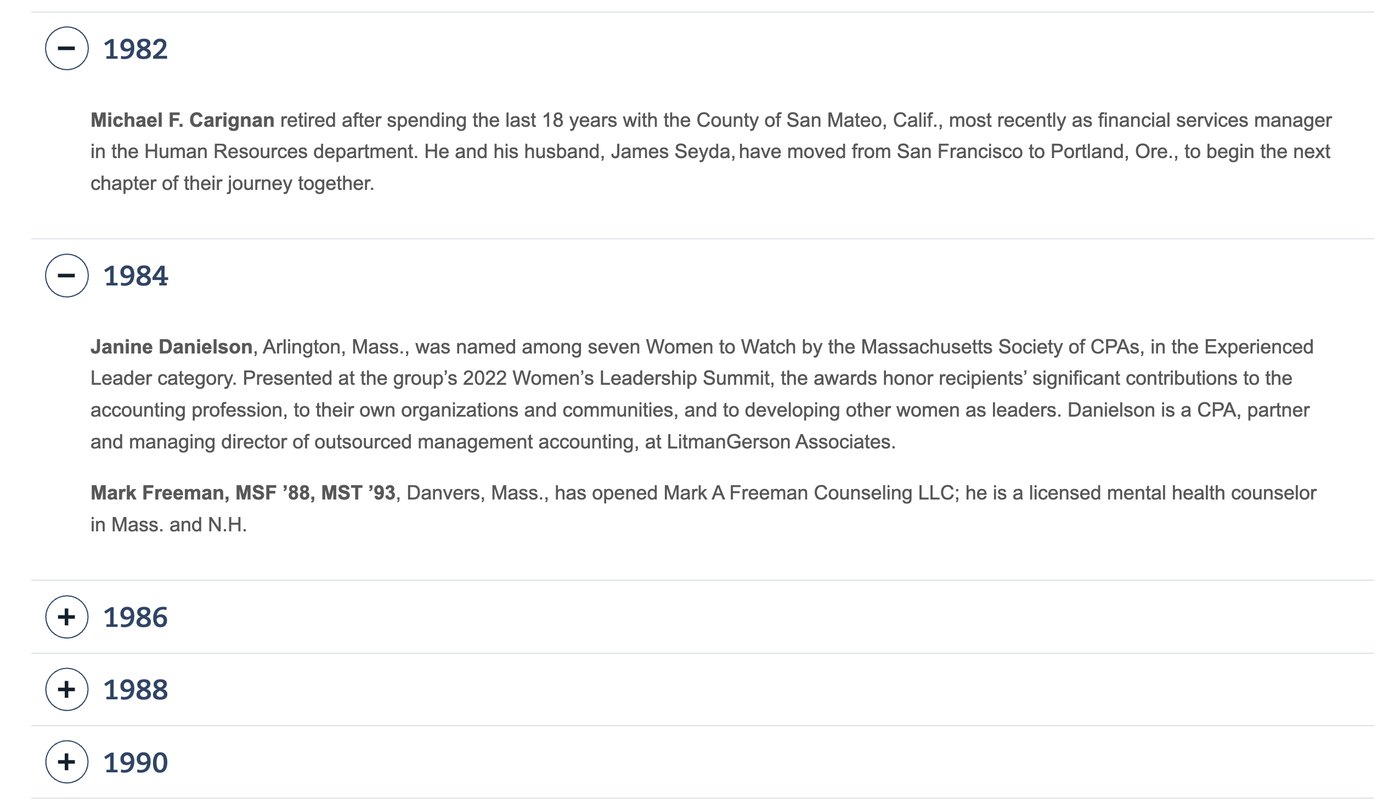
Class Notes is where alumni share life’s milestones with each other — a new job, a wedding, a baby, a death. The format predates the web: alumni magazines have run class notes for generations, and as those magazines moved online, most digital versions just carried over the print edition’s own rules instead of rethinking them for a digital space. That was a missed opportunity.
Before winter 2023, every note was deleted when the next issue of the print magazine launched, leaving nothing for anyone who came back looking for an old friend or classmate.
The idea
The idea was to let the notes accumulate rather than expire. Everything else follows from that, because once notes persist the archive gets richer every issue instead of resetting, and an archive is only worth having if people can get at it, which is where search, filtering and sorting come in.
The scenario I used to make the case was an alum who submits career milestones every few years. An old friend spots his name in the print magazine, searches for it here, and finds fifteen years of his updates in one view.
What shipped
- Name search, the feature the old version most conspicuously lacked
- Filters by class year, by a 1940–2026 range slider, and by note type
- Weddings, Future Falcons, and In Memoriam folded into the core, searchable like any other note rather than siloed off on another site
- The submission form on the page, so reading and contributing happen in one place
- Accordions gone, with notes displaying directly and lazy-loading to control page length
- Filter state readable from the URL, so a link can open on a particular class year
Three sprints, with design and development running in parallel rather than in sequence, so that stakeholders reviewed comps and a working prototype in the same cycle and could react to how the thing actually behaved. I also argued for platform independence, since the comps used Drupal for header and footer context but the application itself doesn’t require Drupal, and platform decisions at a university tend to outlive the people who make them.
Usability Testing
I ran a remote moderated usability study, think-aloud over Zoom, with five tasks against defined success criteria, measuring task success, time on task, error rate and satisfaction.
The interface held up well. Participants rated every task at the easiest end of the scale, noticed the filters immediately on landing, and found a specific alum without hesitation. Scrolling, filtering and searching all led to the same information, which is what you want in an archive people arrive at with different goals.
The finding I didn’t expect was about the name rather than the interface, in that participants weren’t sure what the page was for.
“I don’t think the title ‘Class Notes’ is very clear.”
The name wasn’t mine to change. Class Notes is what the section has been called in the magazine for decades, which makes it obvious to alumni who read it and opaque to everyone else, so orientation had to come from somewhere other than the title. I added a descriptive opening above the interface.
What changed
Time to publish went from as much as six months to minutes. A note submitted just after an issue shipped used to sit for half a year, and two batches a year became continuous entry.
The archive stopped being deleted, and it now holds 250+ notes across class years from 1940 to 2026, which is the equivalent of several years of magazine class notes that under the old model would simply not exist anymore. Most of that is content the old page never contained at all, since weddings, births and obituaries make up the majority and those used to be links to third-party albums.
The audience grew along with the archive, at 13,040 sessions across the 22 months from November 2024 and trending upward.
The archive is also used more in marketing now, with new features that let the team link directly to a specific note, or pre-set filters and class years through URL parameters.